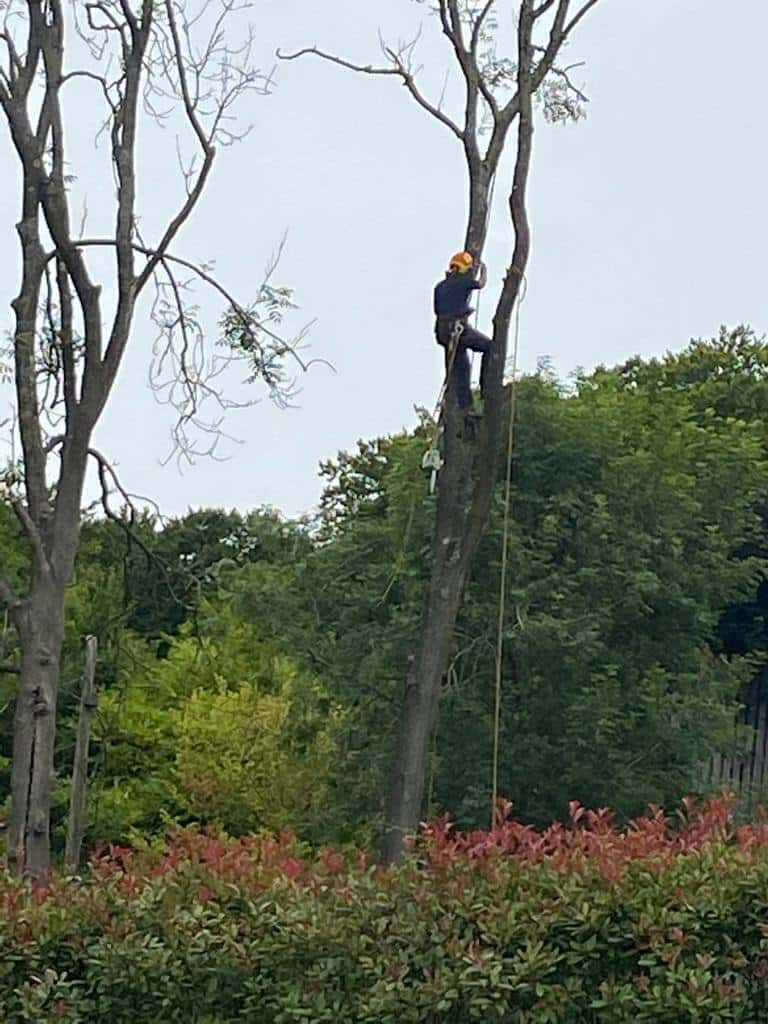
Trees provide shade, support local wildlife and enhance the appearance of gardens and outdoor spaces. However, there are situations where a tree may become unsafe, seriously diseased or unsuitable for its surroundings. In these circumstances, tree felling may be necessary to protect people, property and the surrounding landscape.
For property owners in Linton, Cambridge, deciding whether to remove a tree requires careful consideration. Not every damaged or unhealthy tree needs to be felled, as pruning, crown reduction or other tree surgery work may address the problem. Understanding the warning signs can help you make an informed decision and determine when professional advice is needed.
When Is Tree Felling Necessary?
Tree felling involves removing a tree by cutting through its trunk in a controlled manner. It is generally considered when a tree cannot be managed safely or when retaining it would create an ongoing problem that other forms of tree surgery cannot adequately resolve.
The decision should take account of the tree’s health, structural stability, position and potential impact on its surroundings. A professional assessment can help establish whether removal is necessary or whether a less extensive intervention would be suitable.
Signs That a Tree May Need to Be Removed
Several conditions may indicate that a tree requires closer inspection. While these signs do not automatically mean felling is necessary, they should not be ignored.
Severe Disease or Declining Health
Trees can be affected by fungal infections, decay and other conditions that weaken their structure or restrict healthy growth. Signs may include extensive dead branches, unusual changes in foliage, damaged bark or visible fungal growth around the trunk and roots.
Some tree diseases can be managed through appropriate care, while others may cause progressive deterioration. The important consideration is whether the tree can remain structurally sound and safe in its current location.
A tree surgeon can assess the symptoms, identify possible causes and advise whether treatment, pruning or removal is the most appropriate option.
Significant Trunk Damage or Internal Decay
The trunk provides essential structural support. Large cracks, extensive decay, damaged sections or substantial cavities may indicate that a tree’s stability has been compromised.
However, a hollow trunk does not automatically mean a tree is unsafe. The significance of any defect depends on its size, position, the tree species and the overall structure.
Professional assessment is particularly important where damage is extensive or the tree stands close to a house, garden seating area, driveway or frequently used pathway.
Root Damage or Signs of Instability
Roots anchor a tree and help it absorb water and nutrients. Damage caused by excavation, changes to the surrounding ground or decay can affect the tree’s stability.
Warning signs may include exposed or damaged roots, newly developing ground cracks near the base or a tree that appears to be leaning more than it previously did. A lean alone is not necessarily a problem, as some trees naturally grow at an angle, but a sudden change can indicate instability.
If a tree begins to lean unexpectedly or the ground around its base appears disturbed, keep clear of the immediate area and seek professional advice promptly.
Storm Damage and Broken Limbs
Strong winds and severe weather can split trunks, break major branches or damage the main structure of a tree. In some cases, careful pruning or the removal of damaged limbs may restore safety.
Where the main trunk has split or the tree has suffered extensive structural damage, felling may be the more appropriate option. The decision depends on the severity of the damage and whether the tree can be retained safely.
Avoid approaching a damaged tree with hanging branches or a partially split trunk, as unstable sections may fall without warning.
When a Tree Becomes Unsuitable for Its Surroundings
A tree may remain healthy but become difficult to manage because of its size, position or interaction with nearby structures. For example, a tree may obstruct access, interfere with planned improvements to an outdoor space or create persistent problems because of its location.
Before considering felling, it is worth assessing whether the issue can be resolved through pruning, crown reduction or other suitable tree surgery techniques. These approaches may help manage the tree’s size while preserving its benefits.
Removal should be considered where the problem cannot reasonably be addressed through less extensive work and the tree’s continued presence creates a significant concern.
Why Professional Tree Assessment Matters
Deciding whether to fell a tree involves more than examining its appearance. Some structural defects are difficult to identify from ground level, and apparently healthy trees can have problems affecting their roots, trunk or major limbs.
A professional tree surgeon can assess the tree’s condition, its surroundings and the potential risks associated with retaining it. This helps determine whether tree felling is necessary or whether an alternative treatment could achieve the desired result.
Tree felling also requires careful planning, particularly where a tree is close to buildings, fences, neighbouring gardens or overhead obstacles. The method used must reflect the available space and the tree’s size and condition.
Safe and Professional Tree Felling in Linton, Cambridge
If you are concerned about a damaged, diseased or unstable tree, Linton Tree Surgeons can help assess its condition and identify the most suitable course of action.
Whether the tree requires specialist attention following storm damage, shows signs of declining health or has become unsuitable for its surroundings, a professional assessment can help clarify your options. Where removal is necessary, careful planning and controlled work help protect the surrounding property and outdoor space.
Contact Linton Tree Surgeons to discuss your concerns and arrange a tree assessment in Linton, Cambridge.
Conclusion
Tree felling may be necessary when a tree has severe structural damage, advanced decay, significant instability or a location that creates an ongoing problem. However, removal is not always the only solution, as appropriate pruning and other tree surgery methods may allow a tree to be retained safely.
For property owners in Linton, Cambridge, recognising the warning signs and seeking professional advice can help protect people, property and the surrounding landscape. Linton Tree Surgeons can assess your tree and recommend a suitable approach based on its condition and location.
Call us on: 01223 919 495
Click here to find out more about Linton Tree Surgeons
Click here to complete our contact form and see how we can help with your tree needs.